Sciatica that stops running your day.
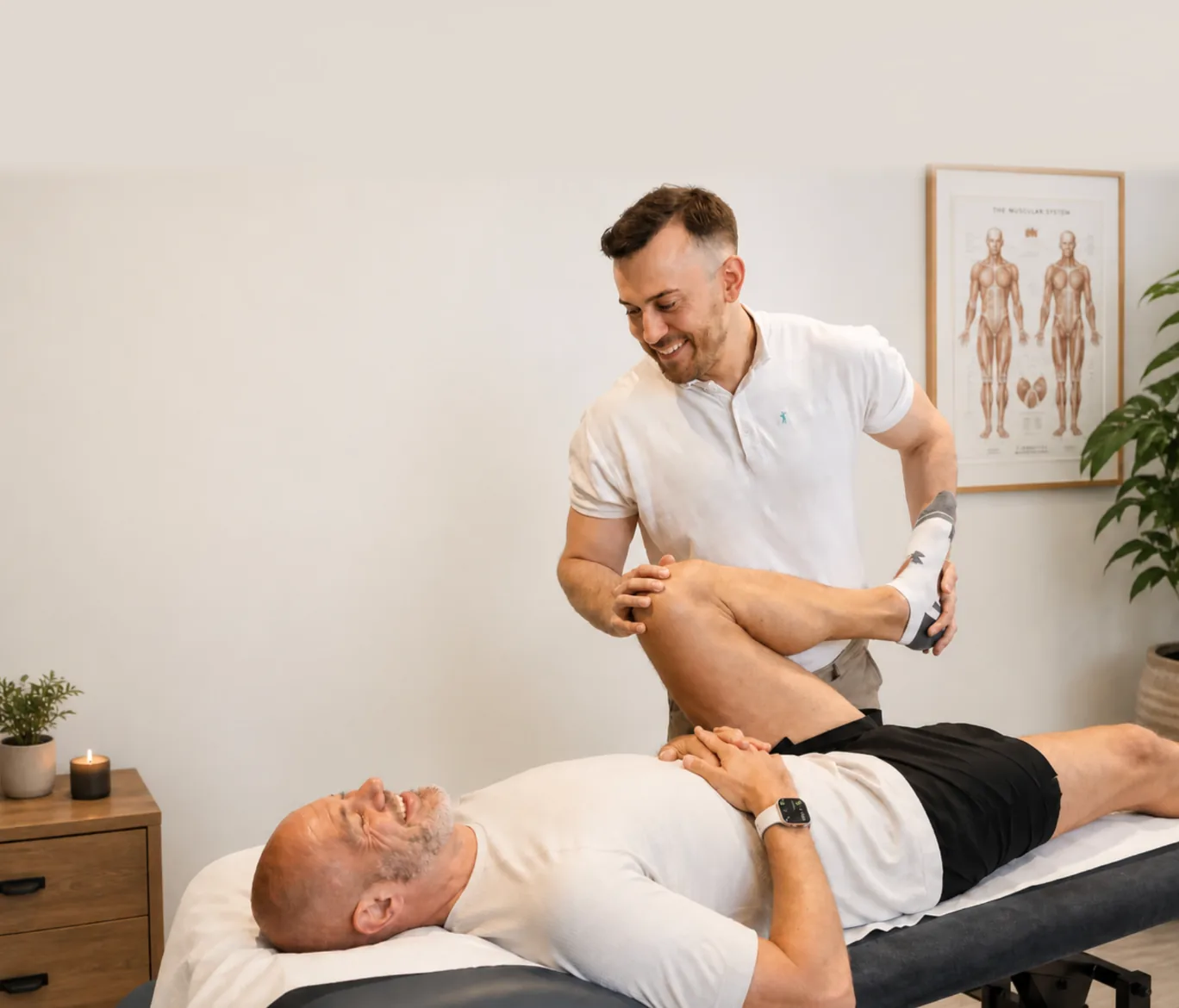
Sciatica describes pain travelling from the lower back into the buttock and down the leg, often with pins and needles, numbness or weakness.





“I came to him with chronic ongoing back pain. I have seen chiropractors and osteopaths previously who have done nothing to alleviate the pain. Before I saw Josh I couldn't even squat without extreme pain. In this short space of time this pain is now gone.”

It is a symptom, not a diagnosis
Sciatica tells you a nerve is irritated. It does not tell you why, and that distinction changes everything about treatment.
The same leg pain can come from a disc, from narrowing where the nerve exits, from deep hip tissue, or from a nerve that has simply become more reactive over time.
Identifying which of those you are dealing with is the entire point of the first appointment. Get that right and the plan almost writes itself.
People search for sciatica physio near me, slipped disc treatment, herniated disc physio and nerve pain treatment and end up in the same place: needing someone to work out which structure is actually involved before treating it.
Common drivers
Accurate assessment separates genuine nerve root involvement from referred pain.
Disc irritation
The most common driver. A disc bulge can chemically or mechanically irritate the nerve root as it exits the spine.
Lateral canal narrowing
Reduced space where the nerve travels. More common with age, often worse standing and walking, easier when seated.
Gluteal and deep hip tissue
The sciatic nerve passes close to deep hip muscles. Tension here can closely mimic true nerve root pain.
Nerve sensitisation
When symptoms have been present a while, the nerve becomes more reactive and less tolerant of ordinary load.
Settle the irritation, then rebuild tolerance
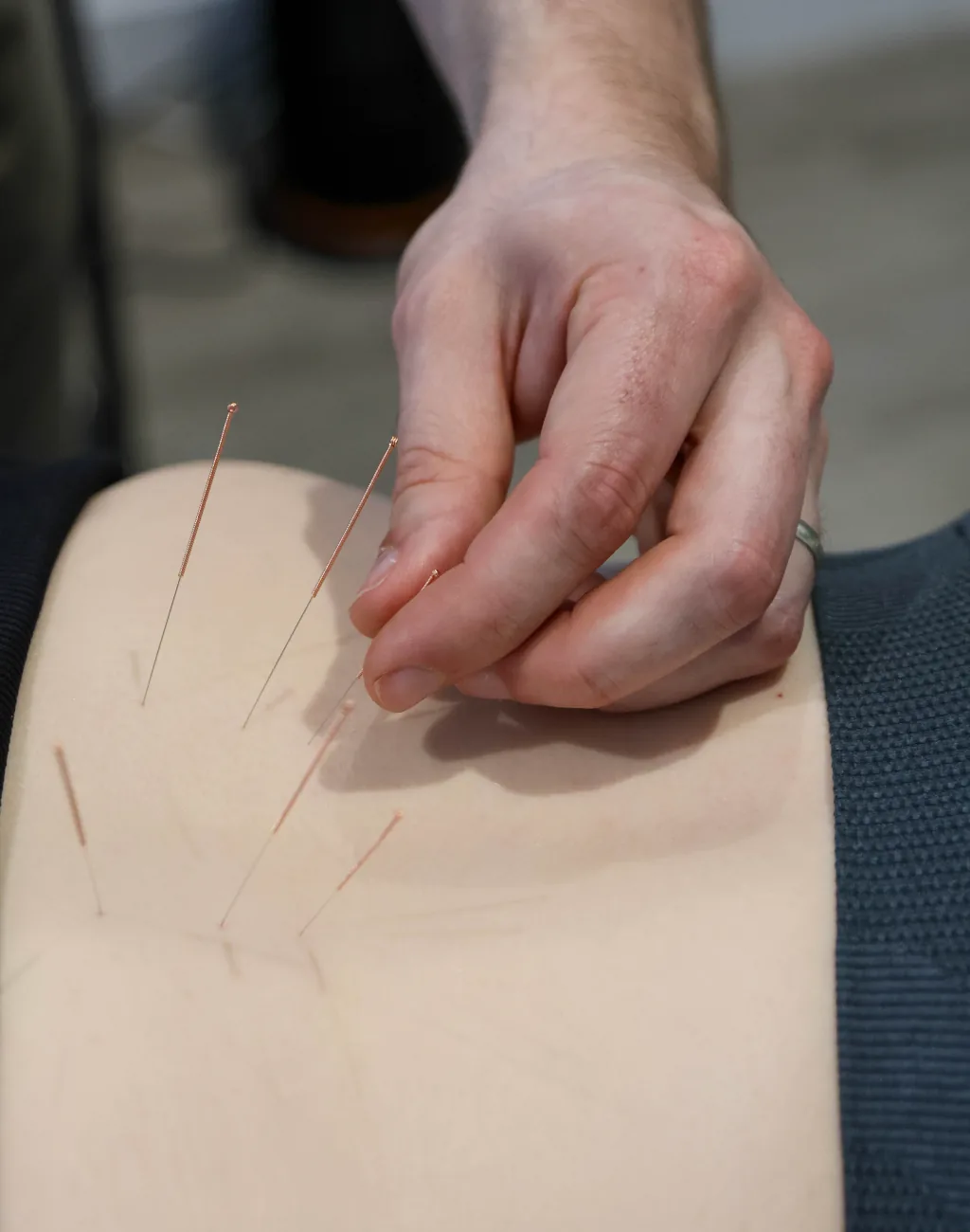
Manual therapy and graded nerve mobility work, followed by loading that the nerve can actually handle.
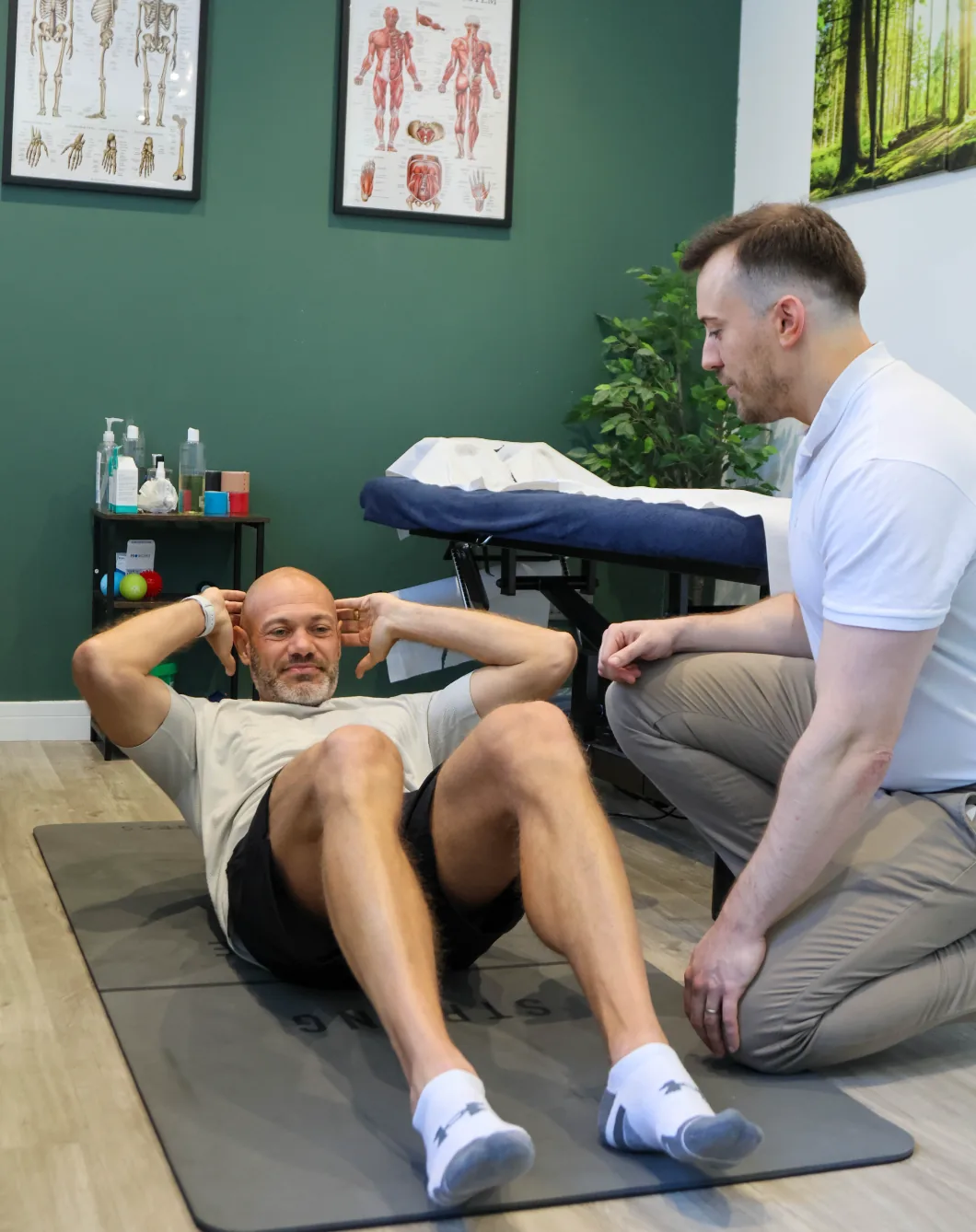

Find out exactly what is irritating the nerve.Red flags screened at every assessment. No referral needed.
“I went to Josh about having pains in my back. Not only did I walk away feeling so much relief at the time, he gave me a plan to ensure the pain did not come back.”

How we treat sciatica
Establish what is irritated
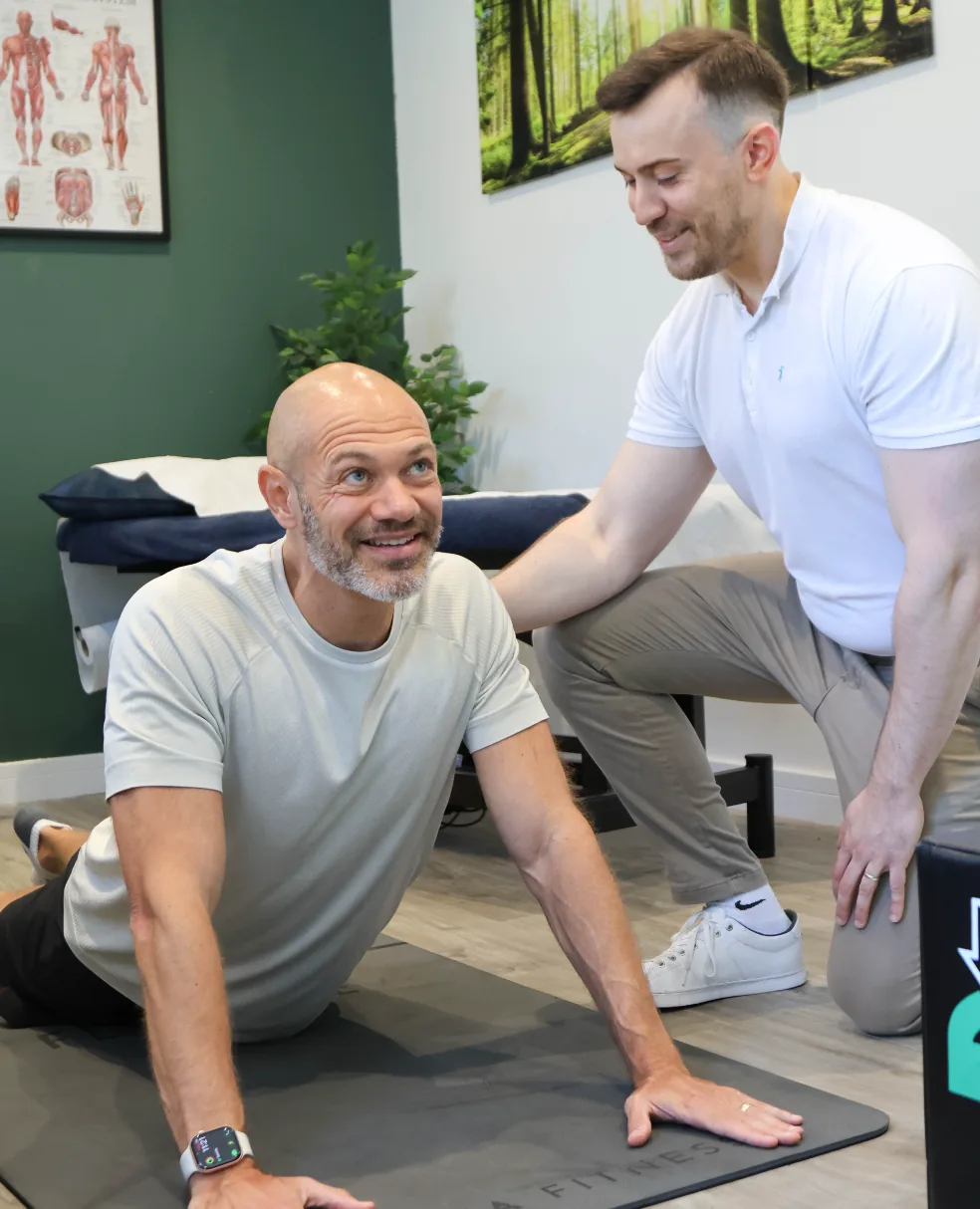
Neurological testing, movement assessment and a careful history to identify the source.
Settle the irritation
Positions, movements and manual techniques that reduce load on the nerve, plus clear guidance on what to avoid short term.
Restore movement
Graded nerve mobility work and loading that rebuilds tolerance rather than provoking symptoms.
Prevent recurrence
Address the loading pattern, strength and habits that allowed it to happen in the first place.
Long term spinal pain, twelve months on
Raffaela had persistent spinal pain. Here is how the approach differed.
Long term spinal pain, twelve months on
Raffaela had persistent spinal pain. Here is how the approach differed.
- Whole picture assessed, not just the painful area
- Lifestyle factors addressed alongside treatment
- Real understanding of her own symptoms
- Tools to manage it long term
What our patients say
Chronic Back Pain Transformation
“I came to him with chronic ongoing back pain. I have seen chiropractors and osteopaths previously who have done nothing to alleviate the pain. Before I saw Josh I couldn't even squat without extreme pain. In this short space of time this pain is now gone.”
Thinking Differently About Pain
“After years of abuse at work and chronic back pain, Josh eased my mind and got me to think differently and manage my pain in a completely different way. I have stretching exercises and strength training. Can't recommend Josh enough.”
Sorted In Two Sessions
“2 sessions with Josh sorted my lower back pain, would highly recommend.”
What good looks like
Not sure if it is sciatica?
Answer 3 quick questions and we'll point you the right way.
We can help with this.
Based on your answers, a specialist assessment would identify exactly what is irritating the nerve and how to settle it.
Common questions
Is sciatica serious?
How long does sciatica last?
Will I need surgery?
Can I exercise with sciatica?
Do I need a referral?
Find us
Visit our private clinic in Medway for your assessment.
BetterMe Physiotherapy
9 Eastwood Meadow
Rainham, Gillingham
ME8 8FA
Parking
Dedicated parking is available for all our patients directly outside the clinic.
Opening hours
Mon – Fri 09:00 – 21:00
Saturday 09:00 – 18:00
Sunday 09:00 – 14:00
Get in touch
Ready to settle the nerve?
Book an assessment and find out exactly what is causing your leg pain.